
Home / Tiling Guides from Ivan / Tiling vs Waterproofing
TILING GUIDE · WET AREAS
In a bathroom or laundry, the tiles are the part you see. Underneath and behind them sit other parts of the job, and some of those are regulated work for licensed specialists. This guide sets out where each part belongs, so you know what to ask before anything starts.
Written by Ivan Bodnar, independent home renovation specialist with about 15 years of hands-on residential renovation experience.
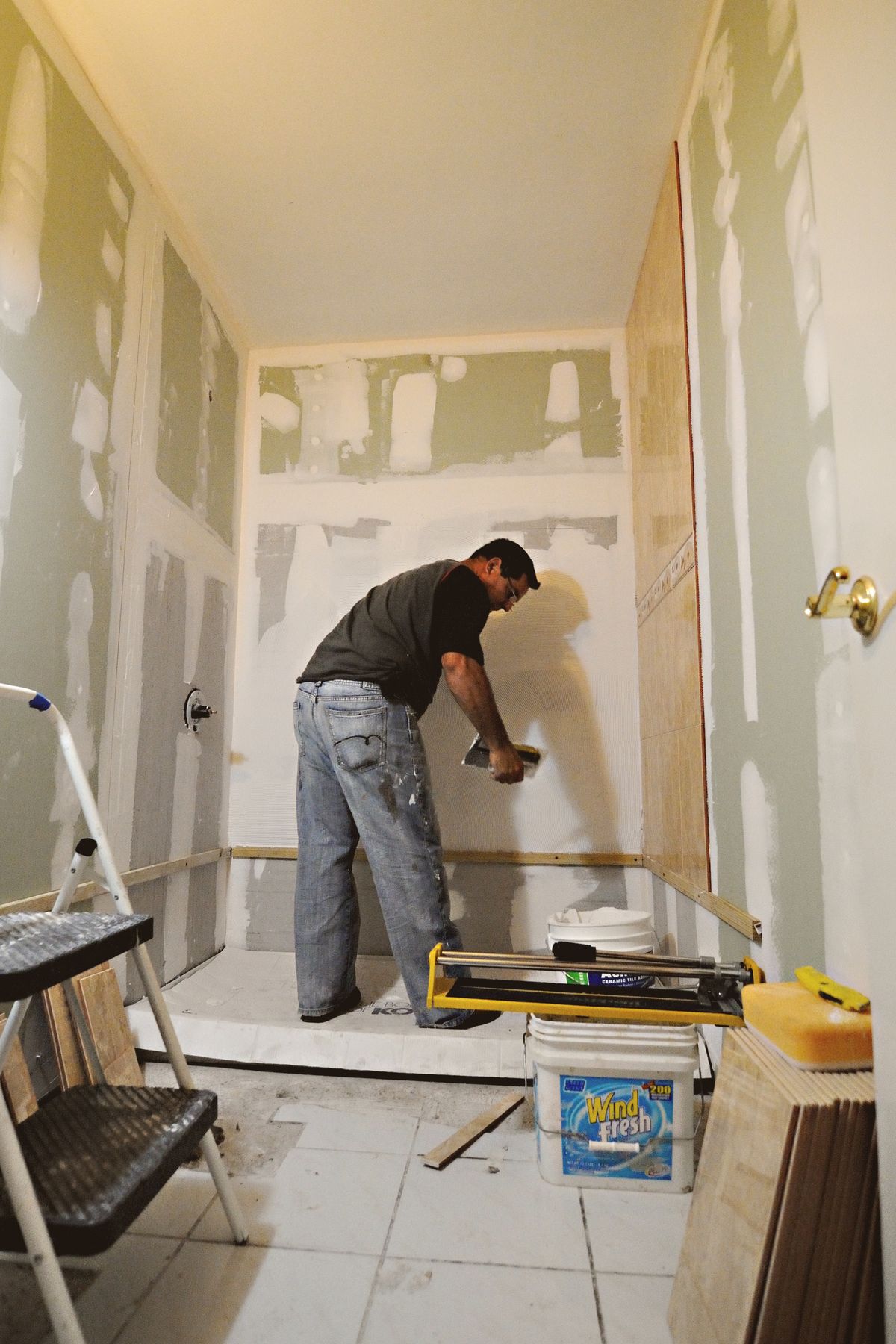
A bathroom wall before the tiles go on
01 — THE ROOM
When homeowners ask me to retile a bathroom, they often picture one trade arriving and finishing the room. In practice, a shower, a bathroom floor or a laundry can involve tiling, waterproofing, plumbing and electrical work, each with its own skills and, for some, its own legal requirements.
My work is the tiling: preparing and checking the surface, setting out, and installing wall and floor tiles. I don’t personally carry out licensed plumbing or electrical work. Waterproofing, plumbing and electrical components are separate parts of the job, done by appropriately licensed or qualified specialists. Where your job needs them, I can coordinate their involvement so the work happens in a sensible order.
02 — THE PARTS
Read from the surface you’ll see, down to what sits behind and beneath it.
PART A · TILING
Checking the substrate for level, movement and moisture, setting out, and installing wall and floor tiles.
Who: this is my part of the job.
PART B · WATERPROOFING
In showers and wet floors, tiles usually sit over a waterproofing layer. Grout and tiles on their own are not the waterproofing.
Who: an appropriately qualified specialist, coordinated where needed.
PART C · PLUMBING
Moving or replacing pipes, drains, taps and fixtures. Drain positions and floor falls affect how the tiling is set out.
Who: a licensed plumber, coordinated where needed.
PART D · ELECTRICAL
Moving power points, lighting, exhaust fans or any heated features. These are usually sorted before walls are tiled.
Who: a licensed electrician, coordinated where needed.
03 — THE ORDER
Tiling is usually one of the last layers to go in. If a pipe needs moving after the waterproofing is done, or a power point after the wall is tiled, work gets undone. That costs time and puts the finished surface at risk.
When I assess your bathroom or laundry, I look at the surface underneath and talk through which other parts your job may need. I’ll tell you plainly what I can do myself and what needs a licensed specialist. Your scope, quote and timeframe depend on that assessment, which is free.
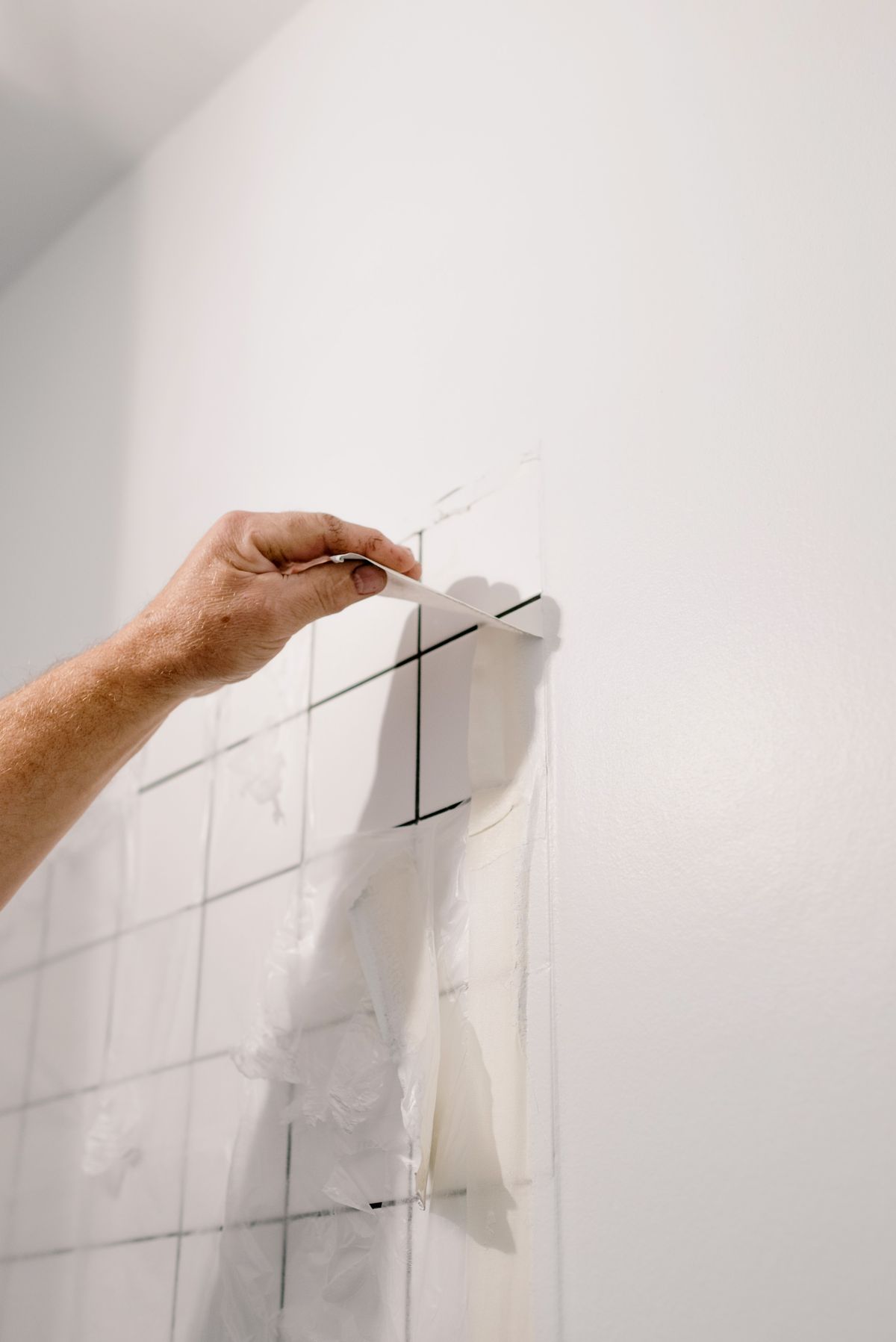
A wall tile pressed into adhesive beside an unfinished section.
04 — BEFORE YOU START
01 Which parts of my job are tiling, and which aren’t?
A clear scope separates the tiling from waterproofing, plumbing and electrical work.
02 Who is doing each regulated part?
Ask who the licensed or qualified person is for each component, and whether they’ll be coordinated for you.
03 What condition is the surface underneath in?
An uneven, unstable or moisture-affected substrate can compromise the finished job, however good the tiles look.
04 Does anything need moving before tiling?
Drains, taps, power points and fans are far easier to change before the walls and floor are tiled.
05 What do current Victorian requirements say?
Rules for regulated work can change. Check current requirements and get professional advice for your property.
This guide is general information. It doesn’t replace an on-site assessment or professional advice about your property.
FURTHER READING
Planning a bathroom or laundry? Send me a short description of the job and your suburb. Photos help. I’ll look at the property before quoting and let you know which parts need a licensed specialist.